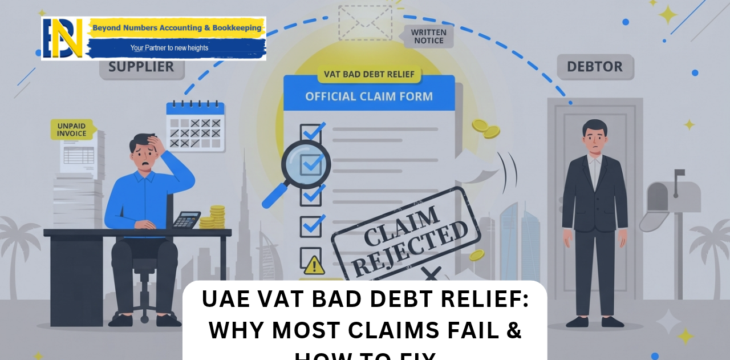
Quick Answer UAE businesses can reclaim output VAT already paid to the FTA on invoices that remain unpaid after six months, under Article 64 of the UAE VAT Law. However, the relief requires satisfying six specific conditions simultaneously. The condition that most businesses fail is the written notification requirement: the supplier must formally notify the...
Read More
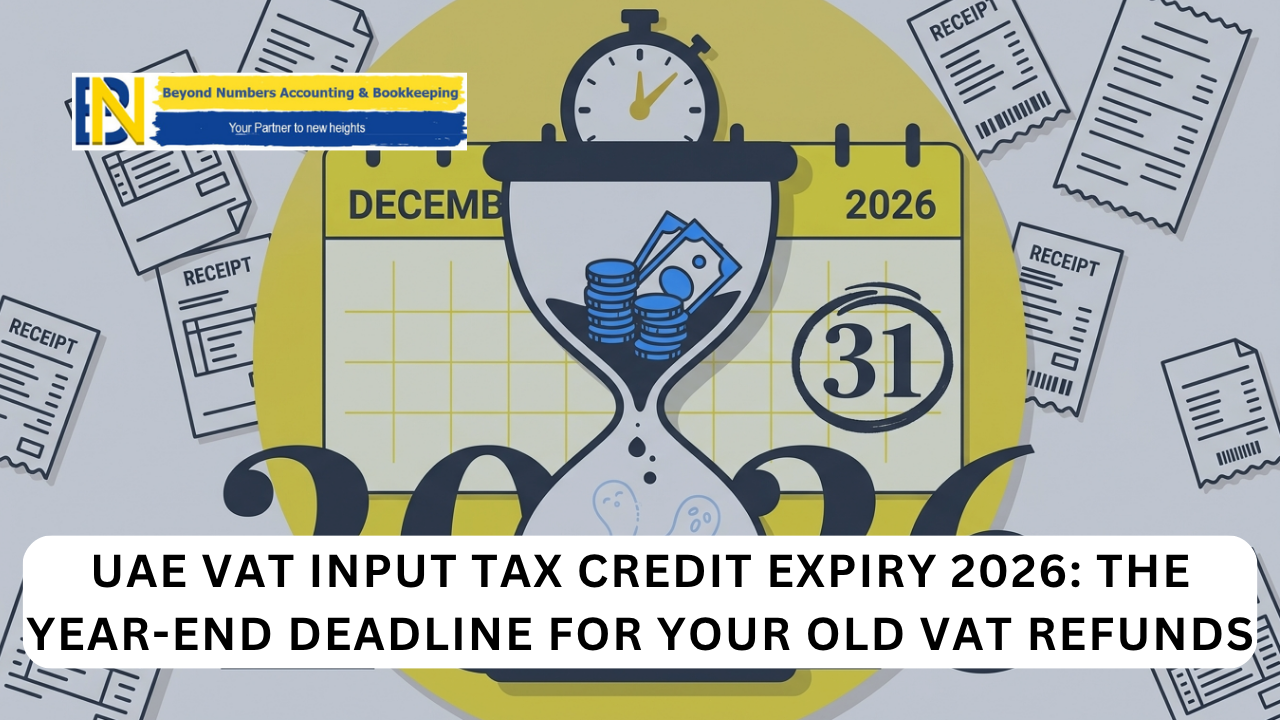
QUICK ANSWER Under Federal Decree-Law No. 16 of 2025, UAE businesses can no longer carry forward input VAT credits indefinitely. From 1 January 2026, a strict five-year limit applies. Any input VAT incurred before 1 January 2021 that has not yet been claimed is permanently lost. Additionally, any business that first incurred VAT credits in...
Read More
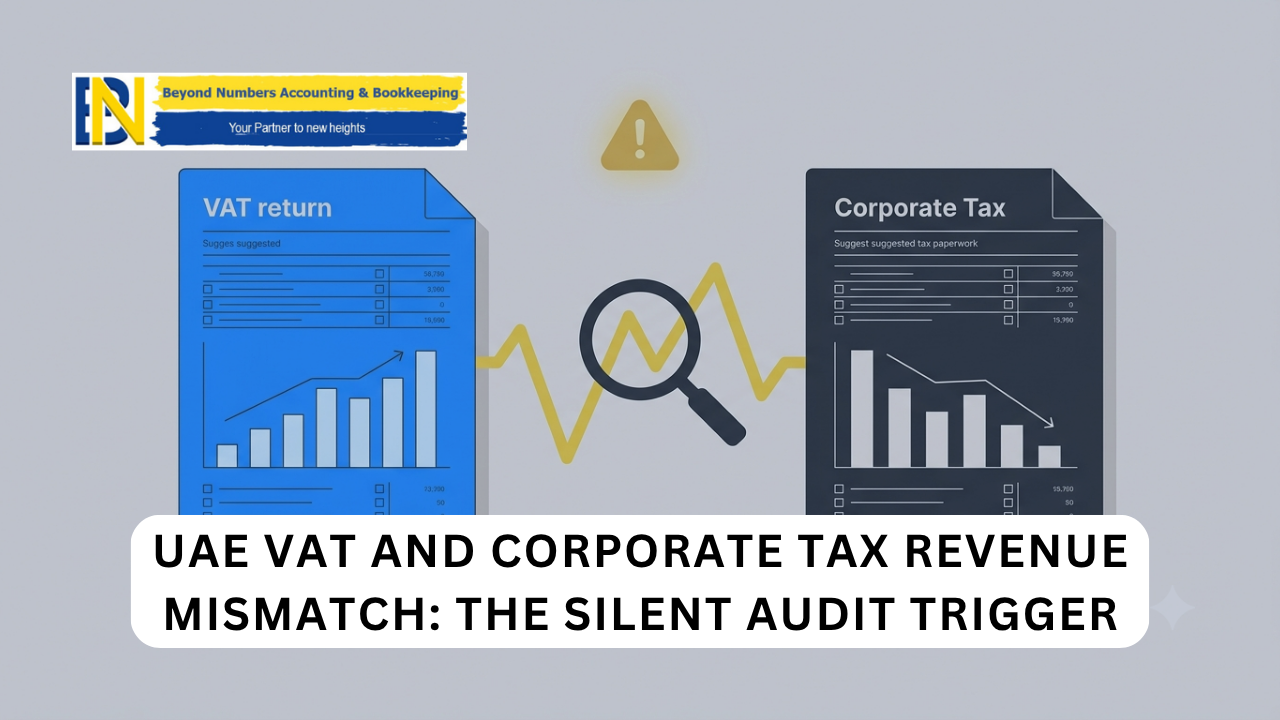
QUICK ANSWER A UAE VAT and corporate tax revenue mismatch occurs when the revenue a business reports on its VAT returns differs from the revenue it reports on its corporate tax return. The FTA's EmaraTax system automatically compares both filings. If the numbers do not match and the business cannot explain the difference with proper...
Read More
QUICK ANSWER Since 1 January 2026, the UAE Federal Tax Authority (FTA) can deny a business's input VAT claim if the FTA decides the business "knew or should have known" that a supply was linked to VAT evasion, under Federal Decree-Law No. 16 of 2025. A business does not need to have committed fraud itself....
Read More
The United Arab Emirates is currently at a pivotal moment in its digital transformation journey. With the issuance of Ministerial Decisions No. 243 and 244 of 2025, the Ministry of Finance (MoF) and the Federal Tax Authority (FTA) have crystallized the implementation roadmap for the national Electronic Invoicing System (EIS). This landmark move marks a...
Read More
The United Arab Emirates (UAE) is consistently solidifying its position as a future-ready economy by actively adopting global digital transformation initiatives. A pivotal moment in this journey is the introduction of the mandatory e-invoicing framework, underpinned by the PINT AE Data Dictionary. This document is not merely a technical reference; it is the foundational reference...
Read More
For businesses engaged in international trade and those operating within the UAE’s strategic Designated Free Zones (DFZs), the management of Value Added Tax (VAT) presents both significant compliance requirements and tangible cash flow opportunities through the VAT Refund mechanism. Exporters and DFZ entities frequently make zero-rated supplies, meaning they charge 0% VAT on their sales...
Read More
The UAE’s Value Added Tax (VAT) framework, while fundamental to the nation’s economic diversification, necessitates that businesses maintain proactive compliance not only during registration and filing but also concerning the formal deregistration process. This procedure, officially cancelling a business’s VAT registration with the Federal Tax Authority (FTA), is a critical juncture. It is an administrative...
Read More
In a globally competitive commercial ecosystem, the nuances of international trade and taxation are paramount for businesses operating within or trading with the United Arab Emirates. A pivotal aspect of the UAE's Value Added Tax (VAT) framework, designed to ensure a level playing field and robust tax collection, is the Reverse Charge Mechanism (RCM). This...
Read More
The implementation of Value Added Tax (VAT) in the UAE on January 1, 2018, significantly reshaped the financial landscape across all sectors, with the real estate industry facing particularly nuanced implications. Navigating the intricacies of VAT in UAE real estate requires a precise understanding of how various property types and transactions are treated under the...
Read More